

The best website option for a cleaning business depends less on technology and more on ownership reality.
- How much time do you have?
- How important is the site to lead generation?
- Do you want to manage updates yourself?
- Do you need something live quickly?
- Are you buying a website, or are you buying relief from a problem you do not want to manage?
Too many owners pick the wrong route because they start with platform features instead of business constraints. They choose the option that sounds cheapest, easiest, or most flexible without asking what will actually help them grow and what they will realistically maintain.
For most cleaning businesses, the best website option is the one that does four things well: explains the offer clearly, earns trust quickly, makes inquiry easy, and does not become a burden to operate.
That is the standard that matters.
The four common website paths
There are usually four realistic routes.
- You can build the site yourself.
- You can hire a freelancer.
- You can hire a larger agency.
- Or you can choose a managed, done-for-you route.
Each one can work. Each one also creates a different kind of risk.
DIY is best when time is available and simplicity matters
A DIY route can make sense if your site only needs a few pages, your service offer is straightforward, and you are comfortable learning as you go. It is most attractive when budget is tight and launch speed matters more than polish.
The downside is that you become the strategist, copywriter, reviewer, and editor. If you do not enjoy any of those roles, the site may stay half-finished or settle into generic messaging.
A freelancer is best when you want custom help without a heavy process
A strong freelancer can help turn scattered ideas into a coherent site. This path works well if you know your business, but you want someone else to shape and execute the website itself.
The risk is inconsistency. Results depend strongly on the individual person, not just the category.
An agency is best when the website is central to growth
An agency can be a strong fit for larger operators, more complex service structures, or owners who want a deeper process. You may get more strategic input, more revision structure, and more polished delivery.
The trade-off is that this route can become more than a smaller cleaning business really needs in order to get leads.
A managed route is best when you want speed and support
This path is often the most appealing to owners who want the business benefit of a site without carrying the technical burden. It is less about building from scratch and more about getting a website live and usable without turning it into a side project.
That tends to matter for service-business owners who are already busy with operations, hiring, quality control, and customer communication.
How to choose based on business stage
If you are a solo operator or a very small team, the best option is usually the one that gets you a clear site live without creating another job for you.
If you are growing and starting to specialize, your site needs more than a generic homepage. Service pages, trust elements, lead routing, and stronger calls to action become more important.
If you already depend on the website for steady inbound leads, you need a setup that you can improve consistently instead of rebuild every time you hit a new stage.
The mistake is choosing a route that fits your emotions but not your operating reality. Owners often like the idea of control, but not the actual work of control. Others think they need a fully custom approach when what they really need is clear service messaging and dependable lead handling.
The questions that make the decision easier
Ask these before you choose:
- Do I want to edit the site myself regularly?
- Do I need the site live quickly?
- Would I rather pay with time or money?
- Do I need a design project, or do I need a business tool?
- Will the website stay simple, or will it need to grow?
These questions help because they turn a vague technology choice into a concrete operating choice.
What the best option usually shares
No matter which route you choose, the site should still deliver the same essentials:
- A specific offer
- A trustworthy first impression
- Clear service structure
- A visible next step
- A simple path to leads
That is why platform arguments often become more dramatic than they need to be. The winning choice is usually the one that gets these fundamentals right and keeps them manageable over time.
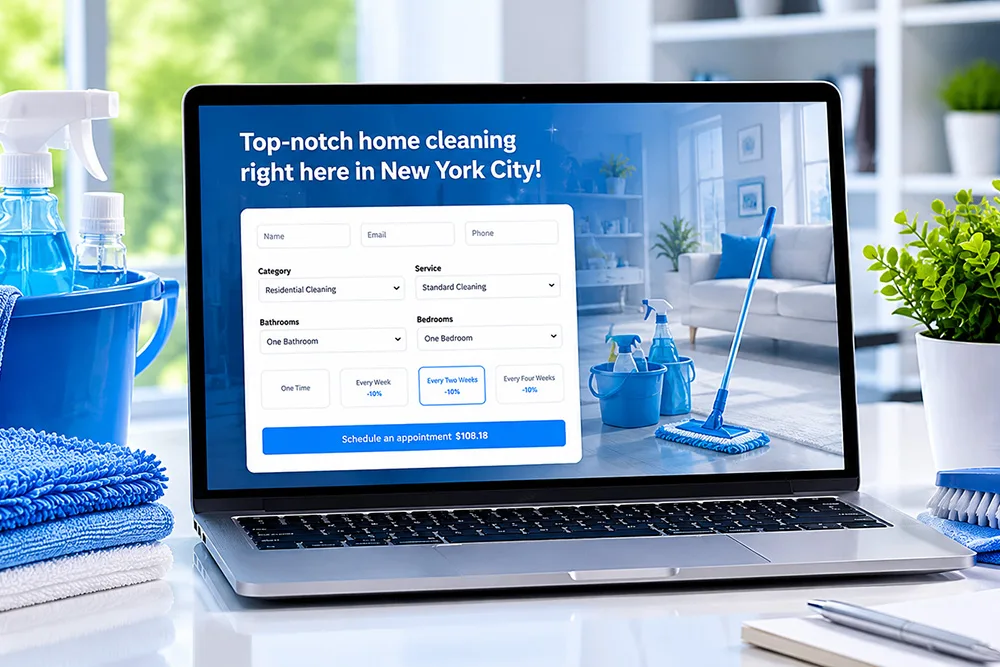
During the earlier homepage observation used for this report, Thessie presented itself as a cleaning/local-service website option with visible pricing, layouts, FAQs, and repeated calls to action. That makes it a relevant example of a managed commercial offer. Details beyond what appeared on that homepage remain UNSPECIFIED here.
A simple decision framework
- Choose DIY if you truly want to manage the site and you can keep the scope simple.
- Choose a freelancer if you want tailored help and good communication matters more than process depth.
- Choose an agency if the website is a major growth engine and you need more structure.
- Choose a managed route if your priority is getting a strong site live without turning website work into ongoing overhead.
That is the practical answer to “what is the best option?” There is no universally best website path. There is only the best match for your stage, time, and tolerance for complexity.
To compare structure and conversion in practice, review these cleaning business website examples and see how Thessie LBP LeadGen supports lead capture.
FAQ
They choose based on features instead of business reality. Time, support needs, and clarity of offer usually matter more than feature lists.
No. It can be especially useful for small service businesses whose owners do not want website management to become a second job.
Start with conversion. A strong website should still look professional, but looks alone do not create trust or leads.